Food safety is a critical part of the food industry. From sourcing raw materials to processing, storage, transportation, and final preparation, every stage of the food supply chain plays an important role in maintaining food quality and protecting consumers.
For food manufacturers, commercial kitchens, restaurants, food processors, and suppliers, following proper food safety and hygiene practices can help minimize contamination risks, maintain product quality, and build customer trust.
Whether you work with fresh produce, frozen fruits and vegetables, fruit pulp, purees, concentrates, or other food ingredients, effective food safety practices should be a priority at every stage.
Why Is Food Safety Important in the Food Industry?
Food can become contaminated through improper handling, poor hygiene, unsafe temperatures, cross-contamination, or inadequate storage conditions.
Food safety is not limited to the final product. It begins with responsible sourcing and continues through processing, packaging, transportation, storage, and preparation.
Maintain Proper Personal Hygiene
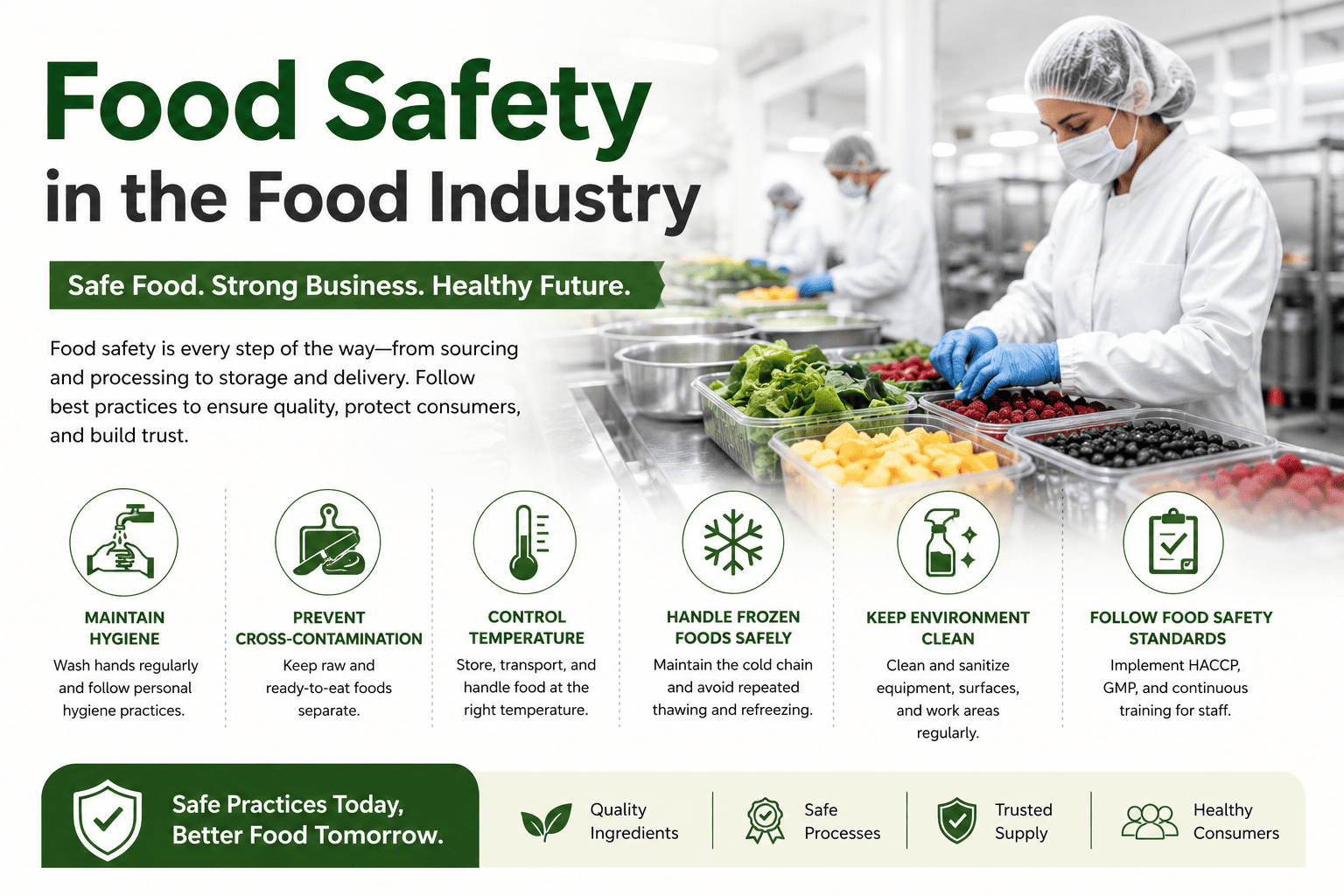
Employees involved in food handling should follow good personal hygiene practices. Hands should be washed thoroughly with soap and clean water before handling food and after activities that could cause contamination.
Food handlers should also maintain clean clothing, keep hair properly covered where required, and avoid handling food when experiencing symptoms that could pose a food safety risk.
Prevent Cross-Contamination
Cross-contamination occurs when harmful microorganisms or contaminants are transferred from one food, surface, utensil, or area to another.
This can happen when raw ingredients come into contact with ready-to-eat foods or when the same equipment is used without proper cleaning.
Follow Proper Temperature Control
Temperature control is one of the most important aspects of food safety.
Perishable foods should be stored, transported, and handled under appropriate temperature conditions. Maintaining the correct temperature throughout the supply chain can help preserve food quality and reduce the growth of harmful microorganisms.
Businesses should regularly monitor refrigeration and freezing equipment and maintain appropriate temperature records where required.
Store Frozen Foods Correctly
Frozen fruits, vegetables, purees, and other frozen ingredients require proper storage and handling to maintain quality.
Handle Fruits and Vegetables Safely
Fruits and vegetables can come into contact with soil, microorganisms, or other contaminants during cultivation, harvesting, transportation, and handling.
Proper cleaning, sorting, processing, storage, and handling practices are therefore important.
For food businesses using fruits and vegetables as ingredients, selecting reliable suppliers and maintaining appropriate quality-control procedures can help support consistent food safety.
Frozen fruits and vegetables can also provide convenient ingredient solutions for food manufacturers and commercial food operations when they are sourced, processed, packaged, stored, and handled appropriately.
Follow Safe Thawing Practices
Frozen ingredients should be thawed using appropriate procedures based on the product and intended application.
Avoid leaving frozen food exposed at room temperature for extended periods. Follow the manufacturer's recommended handling instructions and ensure that thawed ingredients are stored and used appropriately.
Conclusion
Food safety is an essential part of every stage of the food supply chain, from sourcing and processing ingredients to storage, transportation, and final preparation. Simple practices such as maintaining personal hygiene, preventing cross-contamination, controlling temperatures, and following proper storage procedures can help reduce food safety risks and maintain product quality.
For food manufacturers, restaurants, commercial kitchens, and food processors, choosing reliable ingredients and maintaining consistent food safety practices can help build a safer, more efficient, and trustworthy food business.
Safe ingredients. Hygienic handling. Better food.